

The college experience and athletic-academic balance
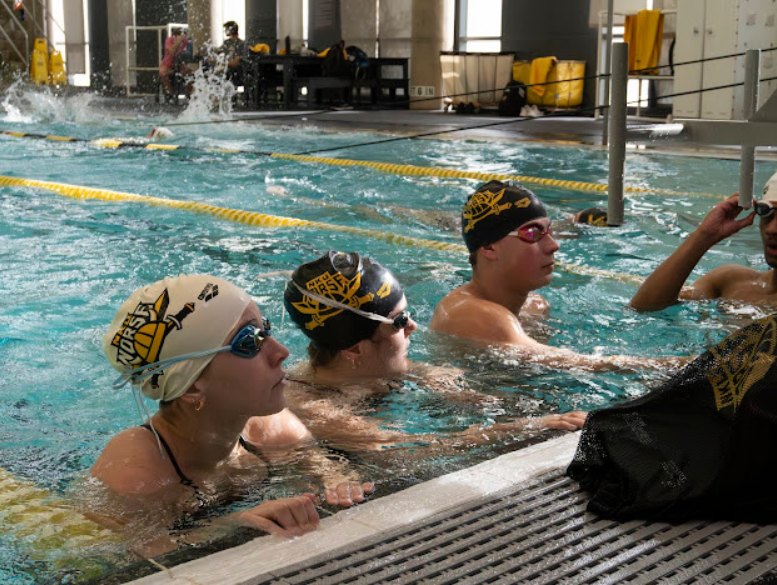
Tyler Cuckovecki and Elena Brown, student athletes from the men’s and women’s swim teams, have a different college experience than most. Swimming at a Collegiate level has changed their academic journey more than the typical freshman and sophomores at Northern Kentucky University.
“It’s definitely more time-consuming than not doing athletics in college. So you meet a lot of people through other sports that are similar to you, in the fact that they also have practice and other responsibilities than just school. Being able to connect like that helps you with the feeling that nobody else understands what you’re going through,” Cuckovecki said
Brown and Cuckovecki mentioned time management and discipline as key factors in their college experience.
“[The] hardest part is definitely the early morning, so you have to get up and do whatever sport you play, which involves you having discipline by getting what you need to get done and going to bed early. That way, you’re able to be ready and fully ready for the next day, the best part is the feeling that you’ve accomplished something,” Brown said.
While struggles for each student athlete are different, time management and discipline help balance both your personal life and your college career.
“You really have to manage your time wisely. I think it’s hard to be able to do you want to be all in on school, and you wanna be all in on athletics and you see your friends having fun. So I think it’s mostly just a sacrifice. It’s probably the hardest part about this is being willing to understand that you’re giving up on things that are short-term gain, so I think keeping in mind long-term goals is the best part,” Brown said.
Many different factors go into why student athletes play the sports they do and why they love them.
“I think it’s really important to have another outlet besides academics. Especially in college life. It’s easy to be consumed by things going on around you, and being able to have that mental break from school, as my coach says, you can’t do homework during practice, and you can’t practice during school. So it’s really important for us to focus on the present moment, and swimming helps me with that,” she said.
Academics
Student-athlete academic advisors, Britney Woodhull-Smith and Rachel Bragg, say there are many contributing factors to the students’ schedules and academics.
“While we are listed as academic advisors, we’re still just one piece of the puzzle and the support system all of our student athletes have,” Woodhull-Smith said.
When it comes to deadlines and due dates for student-athletes that may conflict with their training schedule, there are a lot of moving parts and often a protocol for travel.
“For students in online classes, we tell them they can get the project done and it’s their responsibility even if it’s on a game day… as far as exams, when they’re traveling, it’s still their responsibility to speak with the professor and reschedule if possible,” Woodhull-Smith said.
Oftentimes students don’t have away games and exams that fall on the same weekend but when this does happen, there is a process followed to ensure student athletes can achieve academic success.
“We do provide all of the teams with travel letters… we get the schedules ahead of time from coaches with departure times. So basically, it’s an excuse from class and a wave for professors to be aware, but we make it very clear. Student athletes are still responsible for the full communication,” Woodhull-Smith said.
While student athletes may sometimes be categorized together, each student has their own preferences and struggles within academics. Which means for each student athlete, their academic course load looks different, even if they are playing the same sport or have the same area of study.
“If they’re not the best at science, you probably shouldn’t be taking a natural science course with a lab in season because it just adds an extra component that they might not need to handle,” Bragg said.
When it comes to academic struggles for student athletes, there are resources available to them, as there are for any student. However, academic advisors typically keep a pretty close eye on student-athletes to ensure they get the help they need and can continue training and competing.
“If students are struggling academically, typically they’re having a weekly meeting with us, one of their academic advisors, and we talk through challenges. Sometimes we have multiple students in the same class and we try to encourage athletes to help each other from different teams,” Woodhull-Smith said.
While academic advisors for student athletes have a much larger caseload overall, the responsibility is still on the student to communicate and complete their work promptly and prioritize their academics.
“Each of our caseloads right now is somewhere between 120 to 140 [athletes]… we have no punitive power and there are no consequences we can give; we don’t manage playtime, and we can’t do anything else like that. Ultimately, we’re just trying to help them pass their classes and do what they need to do to provide guidance and ultimately education,” Woodhull-Smith said.
There are various other wellness and mental health opportunities and professionals to help both students and student athletes, especially when dealing with immense amounts of pressure and stress from time management on top of daily life.
Daily schedules and Training
Kevin Woodhull-Smith, coach for men’s and women’s swimming, helps with scheduling, training, and expectations of student athletes. For the swim team specifically, the schedule is a mix of weights and strength training in addition to actual swim time.
“Monday and Wednesday are usually the same. We usually have morning practice, which is an hour and a half, and then swim. And then the afternoon is usually about an hour and a half or an hour and forty-five minutes somewhere in the range, so just over three hours on Monday and Wednesday,” Kevin Woodhull-Smith said.
He later continued, laying out with the rest of the week of training looks like.
“Tuesday and Thursdays are the same, one hour of lift in the morning and then an hour and a half of swim in the afternoon. Friday is just an afternoon, and that brings us out around five hours for the week, and Saturday morning, some of the team does a lift, and then some do an hour and a half of swim,” Kevin Woodhull-Smith said.
He later continued, about class scheduling and how it can affect training.
“We do miss some class for competition, but when we’re training and practicing every week, we don’t miss class for practice. We have to schedule our training around classes, so it’s complicated and yeah, we have some people that come straight from classes right to practice, but that’s bound to happen with any sport,” Kevin Woodhull-Smith said.
When it comes to students who may be struggling academically, there are also ‘study hours’ that are sometimes also scheduled to help the student maintain their academics.
“I would say an average of three hours a week is common for most people, so it’s open to whenever they need or whatever they want to,” he said.
Opportunities like a study table are important to help students still achieve their academic goals and standards, and have time set aside to focus on school, which in turn helps the team.
“Our team goal is over a 3.0 on average… this year we have 16, so I think they want to be a little bit higher than 3.0… usually if you’re over 3.0 for the team average, it’s a good goal. I believe the NCAA participation is a 2.0 minimum,” Kevin Woodhull-Smith said.
Academics are a huge priority for any and all student athletes; it isn’t just about their current competition while in school, but also their education and careers afterward.
“All we want is to have resources for them and tell them that yes support is important, but it is going to come to an end on the flip-side whereas your academics you’re going to use that degree and hopefully go into your career or professional school post grad whatever it may be… we want to understand that the sport is really important and a huge part of your college experience, but it can’t be the only thing you’re focused on,” Woodhull-Smith said.
Things many may not know about student athletes.
There are a lot of moving parts to a student athlete life, and oftentimes, certain aspects get overlooked.
“Our student athletes are dealing with the same stuff on top of the pressure they have to perform, and the new housing settlement has impacted everything. There are fewer roster spots, so students have to be more competitive. There’s always pressure for them to be on all the time, and there are no days off,” Bragg Said.
There are many benefits around the NKU community that student athletes have that help make the difficult things more enjoyable.
“I think the majority of students don’t realize the amount of time that goes into being a student athlete… the time aspect, the effort and drive that you have to be a student athlete is very big,” Cuckovecki said.
But out of difficulties often come the best outcomes.
“If I hadn’t swam in college, I wouldn’t know any of my teammates, and I wouldn’t know anyone here,” Cuckovecki said.
Student athletes have an opportunity to transition into friendships and community around them on college campuses in a way that few experience; however, this is only possible because of the hard work and dedication they put in daily.
“I think we do it for the betterment of ourselves and being able to be involved in something bigger than ourselves. I think that could go for any club or organization, but I think being involved is the best way to meet long-term friends, make connections, open doors, and have different opportunities.” Brown said.
“I genuinely encourage anybody to join athletics if they can.” Brown said.