

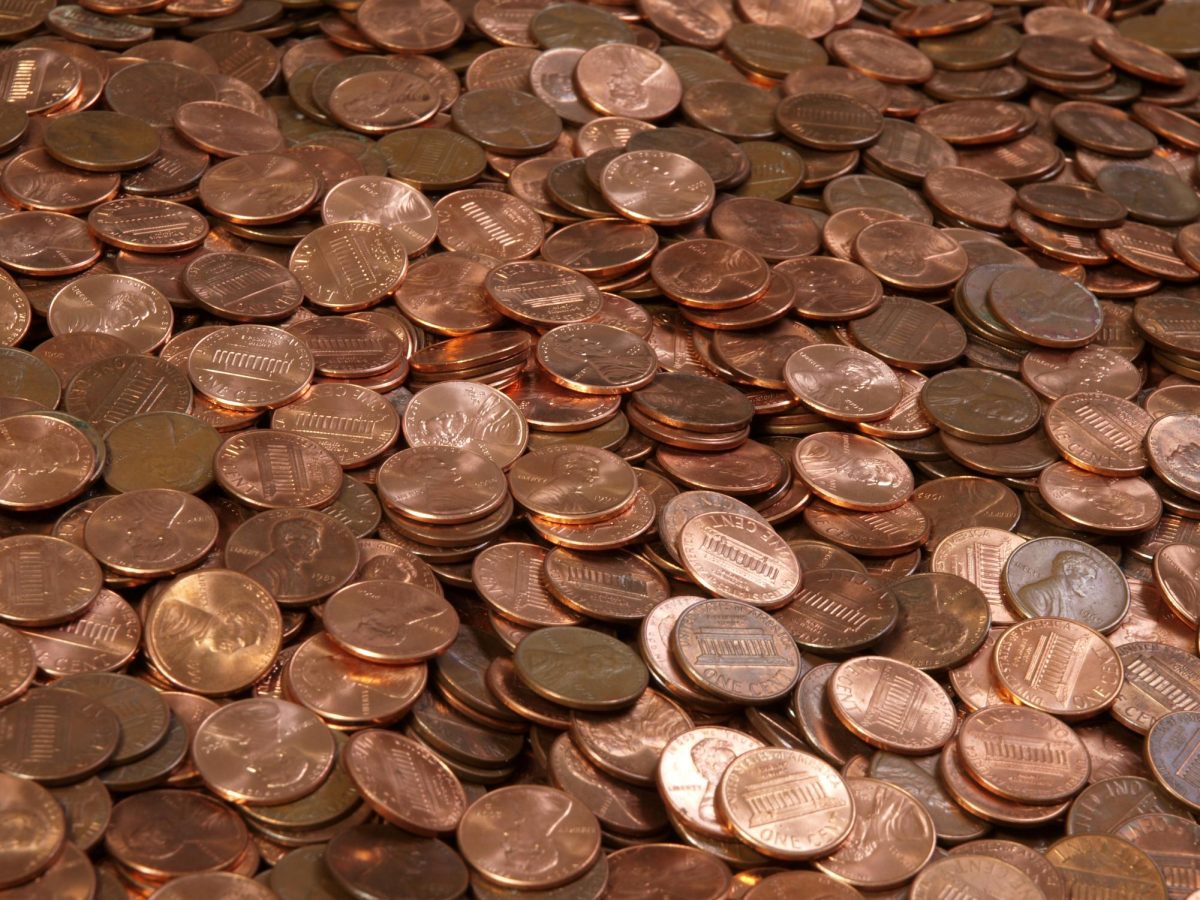
The U.S. government is no longer making pennies due to the rising cost of production.
Minting of pennies stopped in the U.S. in February of 2025.
This decision has sent banks, grocery stores and small businesses scrambling to adjust.
“I bank at U.S. bank, and I used to go once or twice a week to get coins,” said the owner of Discovery Aquatics shop, Andrew Myatt.
Now, Myatt says his local business can no longer rely on a steady supply of pennies from the bank, forcing him to consider alternatives.
With fewer pennies to go around, some businesses are turning to alternatives like card payments to simplify transactions. However, Myatt says that shift comes with its own drawbacks.
“ They are becoming less common because people are using cards more and there are credit card processing fees. I would rather people use cash,” Myatt said. “More people use cards because of the convenience.”
Credit card fees offer a new predicament for local businesses as this issue continues.
“As of two or three months ago, I was told they can no longer order pennies, I only get them if people bring them in,” Myatt said.
Customers are now bringing in their own pennies to help banks have access to them. Still business owners like Myatt say the larger shift in how people pay is changing how often they rely on banks for cash.
“I am down at the bank a couple times a week, cards are 92% of our sales from last month and cash was 8% or 9%,” Myatt said.
Card payments seem to be king for this local business with cash sales declining.
“Honestly, I have that round-up conversation with the customer to avoid any issues,” Myatt said. “I wish someone would just tell us why we have to do that.”
To help ease the worries of customers and keep transactions moving, rounding has become a common practice – something Myatt believes customers are generally willing to accept.
“I think it’s enough because it’s worth it to lose three or four pennies instead of paying processing fees,” Myatt said.
Conversations about rounding and coin shortages seem to be part of the new routine for businesses, even as the uncertainty about the long-term impact remains.
“This hasn’t really affected us yet, and I don’t know what we’ll do yet, I have stocked up on pennies,” Myatt said.
According to Katherine Haan of Forbes Magazine, “The call for card payment options is resounding, with over 70% in every region expressing a preference for businesses that accept card transactions.”
As businesses shift payment habits, Myatt says even the smallest amounts still matter.
“Every dollar, every penny counts, whatever we can do to keep the lights on and bring back into the community,” Myatt said.
Julie Denny, a client relationship consultant at U.S. Bank, said it is giving customers alternative ways to manage their change.
“We are offering to put their change back into their account,” Denny said.
This answer is being shared with many customers at different banks as more adjust their payment habits when handling coins.
“Now, customers are deciding to hold onto them,” Denny said.
As a result, pennies are being considered an archive of the past by many people. Still, Denny said there could be some benefits for bank employees.
“There would be less coins to count which would make our jobs easier,” she said.
Some people are able to view the light in the darkness with this change, seeing it as an opportunity to manage their coins more efficiently. Banks have stepped in to provide clear solutions for customers navigating the new system.
“We set a limit of five dollars [in coins] at a time,” Denny said. “At first they were confused but then understood once we told them.”
This revision is a work in progress. Many banks, grocery stores, and small businesses are still adjusting their systems to handle the change, tweaking solutions as they go.
The penny shortage has also caused disruptions in the day to day operations of grocery stores, says Laura Soward, customer service manager at Remke Marketplace.
“The need for a cashier to be on register at all times during the day has increased,” said Soward. “The self checkouts were our express registers for cash and card.”
This quickly created a challenge in the store’s ability to get pennies.
“Within two weeks, the store’s bank had no pennies to send, we relied on employees and a few customers to sell us pennies,” Soward said.
The store has felt the aftershocks of not being able to get pennies.
“It has made a pretty big difference in register scheduling; we also don’t have to order as much change as we did,” she said.
To ease the worries of customers, the store has implemented rounding as a solution at the registers.
“When we have no pennies at the registers, we round up in favor of the customer, if we owe them a few cents, we give them a nickel,” Soward said.
Assistant customer service manager at Remke Marketplace, Trish Spitznagel, has noticed the reactions from customers to the shortage.
“For the most part customers have accepted the no pennies pretty well, most, even when we have pennies, don’t want them”, said Spitznagel.
Changes at self checkout lanes appear to already be in progress as Remke Marketplace focuses on prioritizing card payments.
“We had to make all the self checkouts card only for now, until they can figure out how to make them work without pennies,” Spitznagel said.
Cards appear to be the choice when it comes to payment methods at Remke Market Place.
“Most of the time cards are used at this store, especially now with the self checkouts being card only now,” Spitznagel said.
The workload upfront for cashiers and staff has certainly become a challenge now that self checkout registers are card only.
“We now have to make sure to have a regular register open at all times due to SCO [self check out] being card only, so the lines do back up more now,” Spitznagel said.
Pennies seem to not mean as much as they once did to the retail business and are no longer a priority for most people.
“At this point most people are used to no pennies, I feel that pennies are not important for this store,” Spitznagel said.
The end of an era is upon us with pennies slowly becoming a thing of the past. Here is a look at how the U.S. used pennies throughout their histsory: