

Series: The effects of House Bill 4


Kentucky House Bill 4, passed in March 2025, directly resulted in the dissolution of the Office of Inclusive Excellence, which housed the African American Student Initiatives and LGBTQA+ Student Initiatives at NKU. Since this happened, NKU students are coming together to try to provide the community that the school is no longer providing. In this first part of a three-part series, we are looking at how African American student leaders on campus have navigated the changes that have taken place.
Due to a lack of support, Black student groups, such as NKU R.O.C.K.S., have had fewer opportunities to promote their organizations and bring students in. R.O.C.K.S. (Responsibility, Opportunity, Community, Knowledge, Success) is a mentorship program for Black students. Even as fewer students are engaging with clubs of this type, these programs are continuing on as registered student organizations to serve the way they have in the past.
“I was definitely able to see the comparison from before the bill and after the bill. It’s much harder to get freshmen involved this year,” said R.O.C.K.S. Lead Mentor and president of NKU Black Student Union Ja’Naysha Bailey. “We’re really trying our best to ensure the students know they have the opportunity to join R.O.C.K.S. and be a part of a good program that is for them. We’re there to help them.”
Certain events that have formerly been planned and funded by African American Student Initiatives have taken a hit as well. Sherehe, a graduation celebration for Black students, no longer has the funding and planning it normally has, putting those responsibilities on the students. This goes hand in hand with Lavender Graduation, which is mentioned in the previous article in this series. Events of this scale are extremely difficult to fund and plan without NKU’s support. Students are working to make them happen if possible, even if it has to be on a much smaller scale.
All of these changes are due to the reclassification of campus groups that came with House Bill 4. These groups are no longer affiliated with an office or department at NKU, so they are now considered to be Registered Student Organizations, as most on-campus clubs are. This was a way to “further define” the way student groups receive different rights from the school, as said by vice president of Student Affairs, Brandon Thompson.
“Some of our orgs [organizations] that were connected to departments in the past changed based on the definitions within House Bill 4. So what may have been considered a university-affiliated organization in the past may be considered just a registered student organization,” he said.
In this process, the faculty members who previously oversaw the African American Student Initiatives have been watching as the students take on these new roles. Greg Moore, the former Director for African American Student Initiatives at NKU, said it has been “extremely challenging” to not be able to see the students push so hard to maintain what they had before and not be able to help them beyond being a faculty advisor for their clubs.
Moore, who currently serves as director of First Generation Student Initiatives at NKU, says he’s been seeing “a significant amount of burnout starting to happen. It’s like the passion is there, the resilience is there, but then even them being mindful of self kind of goes away, and I’ve been concerned with that.”
He also expressed his concerns that the students have been having trouble finding club advisors for their registered student organizations, now that NKU does not work directly with them. Due to the change in law, there will most likely be no reversion to the way it was before in the near future.
In part two of this series, we explore how the passage of HB 4 has affected LGBTQ organizations on campus. Part three examines how faith-based groups are impacted.
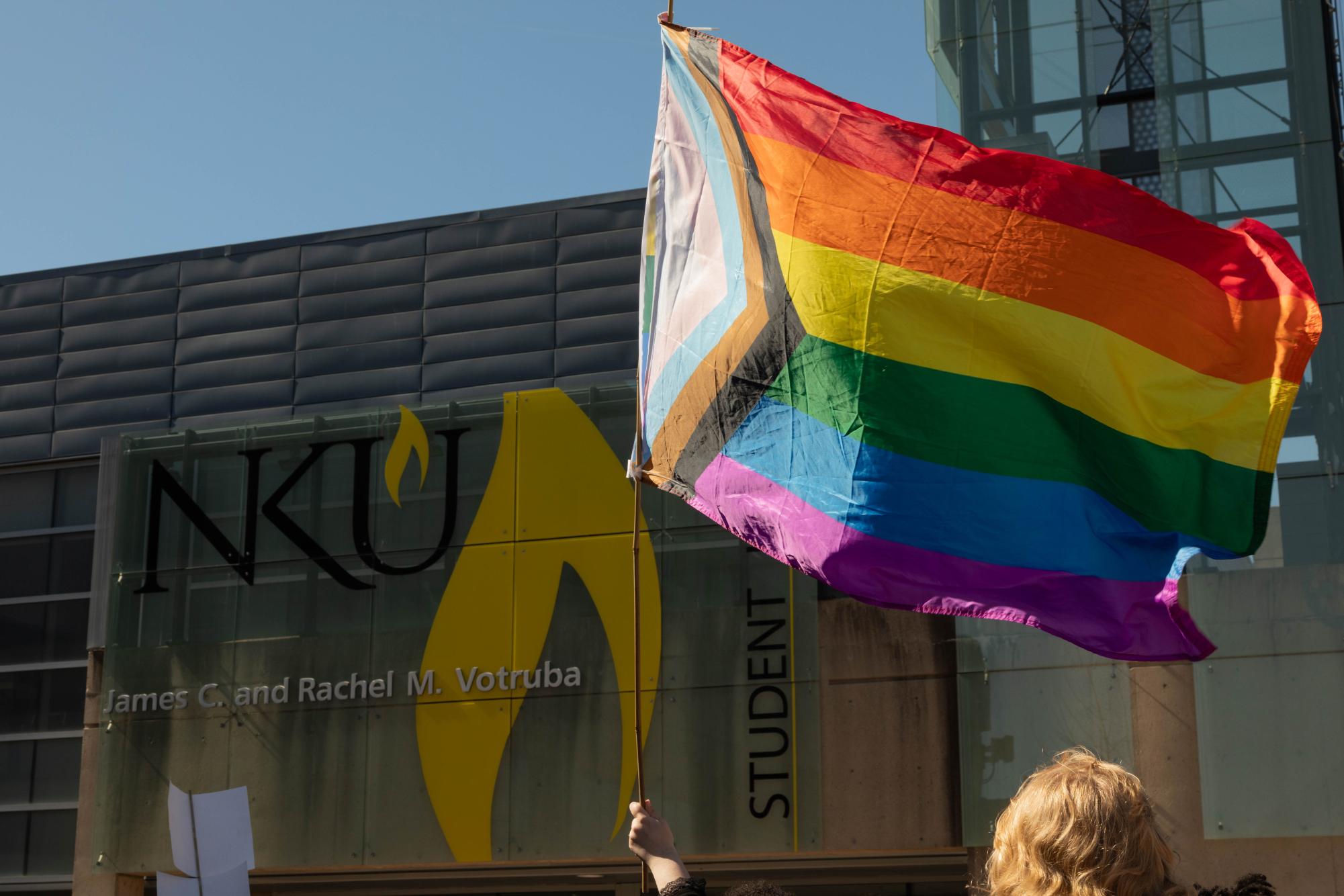
In the wake of the passage of Kentucky House Bill 4 in March of 2025, many student organizations on NKU’s campus have made changes to adapt to this. According to the American Civil Liberties Union, this is one of 12 bills in Kentucky that could potentially restrict LGBTQ+ rights. In the first installment of this series, we covered the religious student groups on campus and their adjustments to this. In this installment, we will cover LGBTQ+ on-campus organizations and how these changes have affected them.
All LGBTQ+ focused groups on campus were once funded and run through NKU’s Center for Student Inclusiveness, which has since been dissolved. All events were planned and funded directly by NKU. Now that House Bill 4 has been passed, that is no longer possible. These clubs have been reclassified as Registered Student Organizations and are no longer directly affiliated with any NKU office.
As mentioned in the previous article, many NKU organizations were experiencing “pockets of privilege” that others were not, as said by Brandom Thompson, NKU vice president of Student Affairs. This means different things for different organizations, such as LGBTQ+ groups receiving full funding, and religious groups receiving things like parking passes for campus ministers from NKU. House Bill 4 aims to even the playing field for student organizations so that all organizations have equal opportunities from NKU, without favoring one over the other.
“We have to do everything now,” said Maddie Chapman, treasurer for The Gender Initiative
(TGI) and Friends of Dorothy (FoD), and public relations officer for the Spade Society,
all of which are registered student organizations dedicated to creating space for LGBTQ+
individuals on NKU’s campus. “We have to raise the money and do everything they [NKU] used to, which is a lot of work upon the students.”
Funding has also taken a major hit for these clubs. While any registered student organization can request funding from NKU, there is a capped limit, so most events must be paid for by different means. Some students, such as the co-president of TGI/vice president of Common Ground, Wren Rogers, have had to pay for things out of pocket in order to support their clubs.
Some events that have taken hits this coming year are the Lavender Graduation and Gayla. Both of these events are higher-budget and larger-scale than most club events. According to Dr. Lavette Burnette, former director of LGBTQA+ Student Initiatives and current director of Commuter Student Initiatives, Lavender Graduation, an event to recognize the efforts of LGBTQ+ students, typically costs $2500 to $3000 to put on. Without NKU’s funding, these events are no longer possible at the scale they once were.
Now that all Registered Student Organizations are fully student-run, the LGBTQ+ groups on campus have begun to collaborate in their efforts to give queer students the same safe space they previously had within the Center for Student Inclusiveness and plan events that bring people together. The leaders of these various groups have been meeting and working on putting together collaborative events in the near future.
One thing that has affected groups in a positive way after House Bill 4 was passed is the newfound creative freedom in planning events. Ben Robinson, vice president of FoD and founder/president of the Spade Society, said that the recent drag show on campus was an example of this.
“We had the ability to make videos, have singing segments– songs that weren’t having to be censored– because it’s not run by an NKU institution, so we had more creative control,” he said. Formerly, this event was one that NKU would host, fund, and provide the entertainment for. Now all performers are students, and the entire thing is student-run.
Despite the changes that student organizations are adjusting to this school year and beyond, student leadership is confident in the queer community on campus and in keeping their clubs running.
“We are highly capable, and while it does take more effort, and we definitely feel it at the end of the day, it’s definitely worth it, and we’re definitely not done yet. There’s a lot planned,” said Wren Rogers.

The passing of Kentucky House Bill 4 has led to some prominent changes to the inner workings of Northern Kentucky University’s offices, most notably, the dissolution of the Office of Inclusive Excellence and the Center for Student Inclusiveness. But its passage has also made lasting alterations to the way student organizations are framed. In this first part of a three-part series, we are looking at how religious organizations are adapting.
The relationship between campus ministers and NKU has experienced some modifications while handling these circumstances. Campus ministers generally are not staff or faculty members of NKU, and instead work externally as church leaders. Because of that, clubs and ministers will no longer have NKU email addresses as they did before.
This is in part due to “pockets of privilege that were afforded to some organizations and not others,” Vice President of Student Affairs, Brandon Thompson, said.
In the past, religious groups on campus have had benefits that are not granted to other clubs, such as club emails. Student organizations have been reclassified
and along with this is an equalization of privileges among groups.
The erasure of email addresses has led to a “difficulty in digital communication,” according to Ignite the Norse Executive Director, Josiah Allcorn. He said that the difficulties of being outside NKU’s email system have caused important details to be overlooked, such as leadership trainings and meetings. NKU email servers have also been reframed, which has led to a slowdown in mass communication from clubs. Clubs are now creating their own emails separate from the NKU system, which can lead to
emails getting put in quarantine when sent to NKU emails— “If you don’t have an NKU email, it can be kind of wonky with their systems.” Josiah put.
The manner in which group responsibilities are being divided has made a change as well. Without NKU email addresses, ministers are no longer able to book spaces on campus or schedule tabling time. This means that these tasks are now a responsibility of student leadership. Some groups, such as Ignite the Norse, do not currently deal with this as others do, as their executive director is a current student at NKU as well as working for Ignite. Other groups, such as the Baptist Campus Ministry (BCM), are navigating this new system.
“We’re having to do a lot more of like the administrative stuff,” says BCM President and senior student Elaina Hall. “A lot of that stuff that happened behind the scenes that I didn’t even realize we needed to do all fell on me, and I was like, ‘I don’t know how to do this.’”
Parking policies have also been adjusted for campus ministers, meaning they no longer have on-campus parking passes or Rec Center access. Groups such as Vine & Branches need to adjust their presence on campus. They are known for bringing their espresso machine to tabling events to provide free coffee to students, but that is no longer an option.
“The whole setup, even if I get out my foldable wagon, is just too cumbersome,” said V&B Pastor Dominic Guido, who now walks to campus for events and to work. “It means we have to do things differently. How can we be on campus in another way? So you know, it’s just a little bit of imagination. I’ll often take my stuff out to the student union and just work there with my little sign that says ‘the campus pastor is in.’”
Despite all these changes, though, BCM Campus Minister Josh Skipper said he believes NKU and student organizations will be able to find a “happy medium” and figure out what works best. He said that it will take some time to figure it all out, but that NKU has always made a welcoming environment for all campus groups in the 10+ years he has been working with NKU and the BCM.
“President Cady’s got a great direction for the university,” He said. “She loves the students, and I think she’s very supportive of student organizations and ministries. …I feel confident, as they’re working through this, that this isn’t going to be the usual state of affairs.”
Vice President Thompson says the school wants to keep “open lines of communication” between them and student organizations.
Your donation will support the student journalists of Northern Kentucky University. Your contribution will allow us to purchase equipment and cover our annual website hosting costs.