




The pen trembles slightly in his hand, hovering over the page. Outside, the sunlight fades behind the trees around his small Northern Kentucky home. While shadows settle across his desk, a black composition journal sits open and waiting to be filled. In the
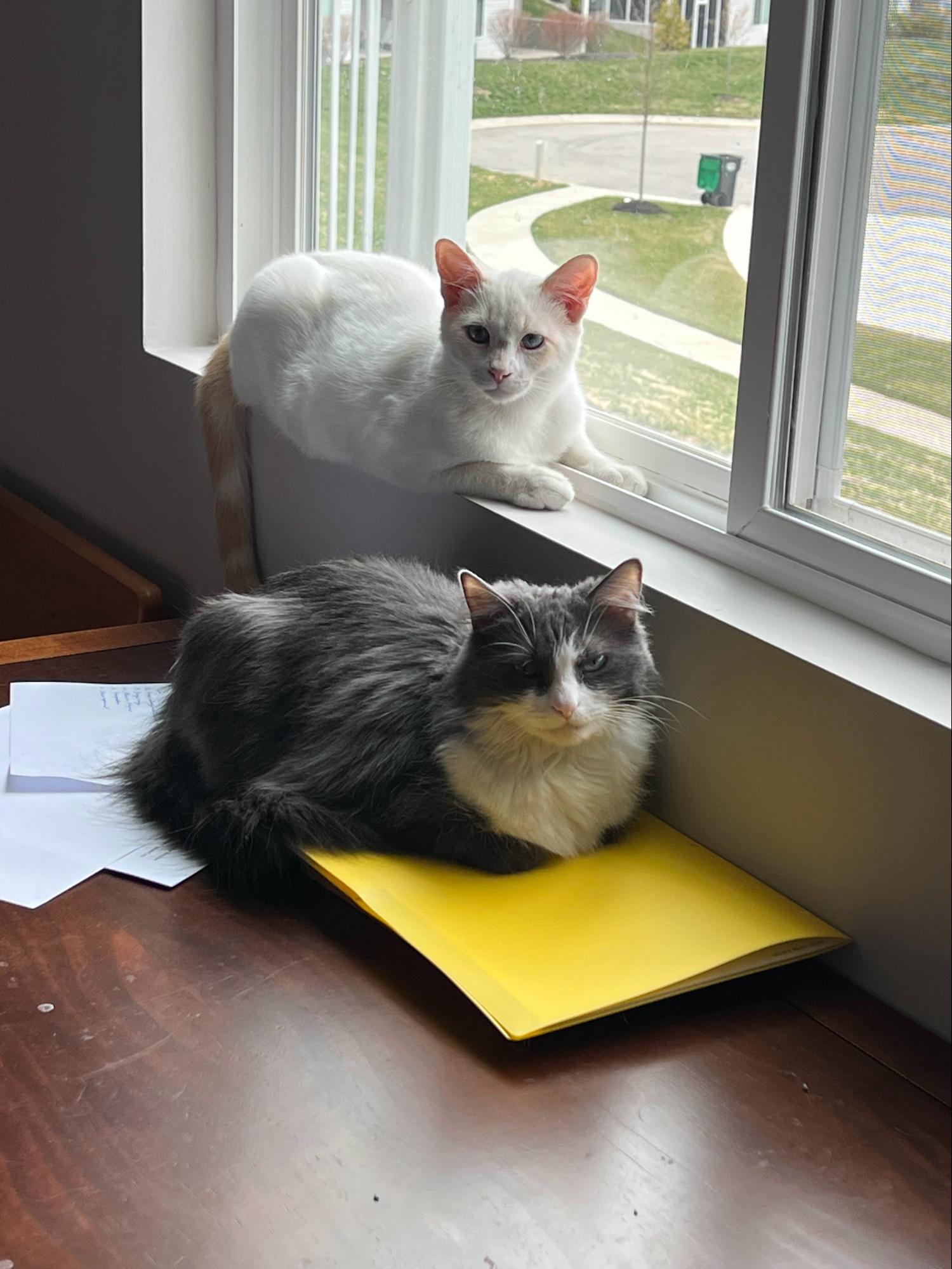
corner, his two cats, Onyx and Micki, purr quietly. Roy Faulkner tightens his grip around the pen. With steady hands now, he puts the ballpoint to the page, writing the date. From there, he begins a silent conversation with himself. He asks things like, why did he cry, what did he see, what did he hear, what did he feel when he began to cry?
Some people find purpose in love. Others find it in loss. Grief didn’t silence Roy Faulkner; it gave him a new voice.
Born and raised in Louisville, Kentucky, the 72-year-old graduated in 1975 from the University of Kentucky with a Bachelor of Science and returned in 1977 to get his master’s degree in mathematics—something steady, practical and safe. Life alone was predictable and calculated, and for a while, Faulkner liked it that way.
In 1978, Faulkner moved up to a Northern Kentucky apartment complex. A little over a year later, Sharon Miller moved into the apartment below. After exchanging brief conversations in passing and eventually going out on a few dates, Faulkner began to fall for her, and soon enough, they were moving in together.
“I realized that she was this woman that I dreamed about years ago. And I had this feeling of deja vu,” he described.
Faulkner posed the question of marriage, and Sharon Miller happily became Sharon Faulkner.
While they were living in Northern Kentucky, Roy Faulkner spent three semesters teaching math at Northern Kentucky University. There, he taught probability, combinations and permutations.
In 1996, the Faulkners moved from Northern Kentucky to a house in Louisville. They spent 38 years of marriage together; life was simple and good. They shared meals, long talks and quiet companionship. For once, his life was filled with more than just numbers; it was filled with the excitement of what each day would bring with Sharon Faulkner. But then, something unexpected crept in, and things would never be the same.
In August 2013, Roy Faulkner found out he had colon cancer. Even so, he never lost hope. Sharon Faulkner was there beside him for every moment.
“I knew from the beginning diagnosis, even after the surgery, that I was going to be okay,” Roy Faulkner said. “But it just changed my perception, perhaps, on recovery from something like that.”
While he slowly recovered, their lives took yet another turn. Sharon Faulkner was diagnosed with ovarian cancer and started receiving chemotherapy in 2014.
The year before, Sharon Faulkner had already been experiencing unrelated underlying health conditions and attended wellness appointments at Wellness MD, in Louisville. She received treatment for her physical, emotional and lifestyle needs.
Brittany Galvan, Holistic Nutritionist, at Wellness MD, helped Sharon Faulkner heal herself from the inside out.
“I saw Sharon before her diagnosis; she was coming to me for preventative treatment,” Galvan said. “We focused on preventative medicine at the wellness center, treating the whole person (mind, body and spirit) in addition to diet, exercise, stress reduction, supplementation and detoxification.”
On a routine basis, the Faulkners attended sessions with Galvan.
“Roy would accompany her to many of our appointments,” Galvan said. “He would just listen in on her appointments for her healing and our path for nutrition.”
In 2018, not long after Roy Faulkner recovered from colon cancer, he faced yet another diagnosis—prostate cancer. As he began a new process of healing, his wife’s cancer became more aggressive. Sharon Faulkner’s chemotherapy treatments were unable to repair the damage that had been done. Roy Faulkner stayed by her side through it all, holding on to those last precious moments of her joyful presence. But her passing on March 1, 2019, shattered something deep within him, something that numbers and logic could not mend.
“I think that that deep grief…that only comes from something like that,” he said. “That just changed my brain chemistry or something. I don’t know what it did, but I thought, even from the beginning, right after she died, well, maybe I need to write something.”
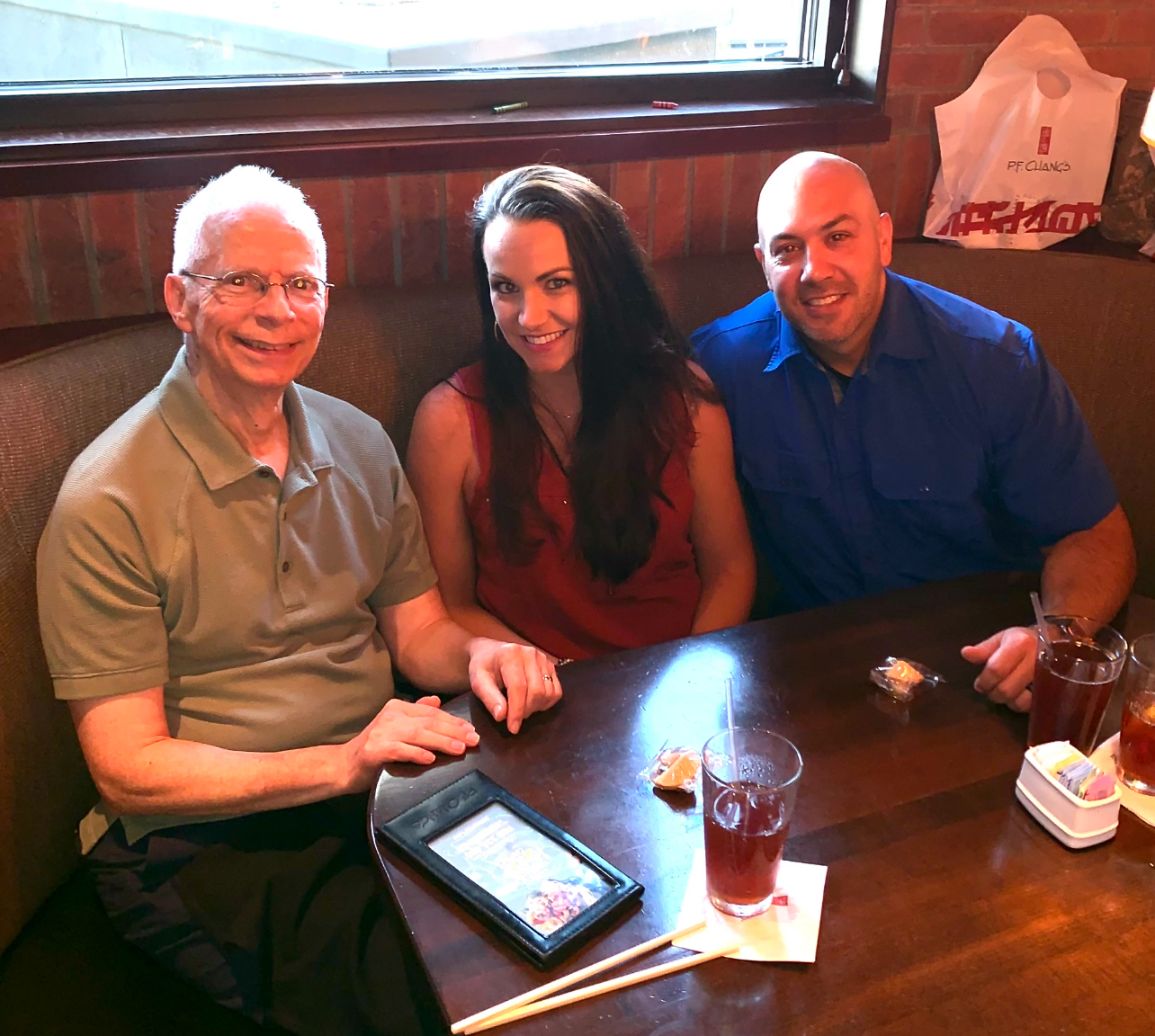
After her passing, Galvan bonded with Roy Faulkner, becoming a moral support system for him as he was grieving.
“We got really close after Sharon passed, because nothing bonds you more than love. And I think the love of Sharon really solidified our relationship,” Galvan said.
Three weeks after his wife’s death, Roy Faulkner began to journal. It started quietly in his room, just a few lines at night, a way to make sense of the grief that loomed over him.
“If I wrote anything before, it was just like a one-stanza thing,” he said. “It was after her passing that I started writing, and before then, it was like nothing poetic came out of my mouth or fingers or hands.”
Galvan encouraged Roy Faulkner as he discovered this new talent. She knew immediately after reading his poems that he had a gift, and she saw how writing was helping him cope.
“It blew my mind to think someone who’s never written poetry, who was never a creative writer, never a journalist, like, none of that background—this just happened. Like this just came out,” Galvan said. “And so that’s when I told him, I said, ‘You’re a poet. You should write. You should be a writer.’”
On June 13, 2019, Roy Faulkner wrote his first poem, “Arrival.” By August, he had written sixteen. One morning that same month, he shared a few of his poems with a stranger at Wild Eggs, a breakfast spot in Louisville. She began to cry.
“I showed her, well, my poems, and on the fourth poem, I showed her, she was crying, and I said, maybe these are good after all,” Roy Faulkner said.
It was the first time he realized that his words could reach someone. That moment stayed with him.
Roy Faulkner wanted to take his writing even further. He pitched the idea of writing a book to Galvan to see what she thought about him taking this next step.
“He said he wanted to write a book. And I said, ‘Yes, you should go for it!’” Galvan said. “Someone else can read this, and hopefully it will help them not feel alone.”
On July 12, 2022, Roy Faulkner published his first book titled “Grief, Love and Other Light Topics,” a collection of haiku and poems, speaking the voice of grief that refuses to fade. They are not about conquering grief but coexisting with it.
In a poem Roy Faulkner wrote titled “Grief’s Departure,” he personified the emotion, speaking with grief and accepting that it will always linger.
“Grief’s Departure,” final verse:
Grief is still packing his bags
He hasn’t left the premises, yet
He’s moving into a house
just a couple of doors down
someone else has lost someone
he will still visit
“I don’t want to say, overcome the grief, because it’s always with you to some degree,” he said. “I think you get through it.”
His writing process came naturally to him, but also took revisions and rewrites. In one of the book’s poems, titled “Selfish,” he wrote about feeling guilty for wanting to pull his wife down from heaven back to him.
“Selfish,” second and third verse:
But, I would do anything
To have her back for a while
To see her once again
Especially, that beautiful smile
But, am I being selfish
To wish her away from there?
To wish that she be near me?
To touch her auburn hair?
After time passed, Roy Faulkner recently decided to rewrite “Selfish” with a slight tone shift, focusing on the acceptance that came with the pain of missing her. He titled it “Missing.”
“Missing,” first verse:
I was broken the day she died
But I have healed
And I now realize
It would be selfish of me
To want her back
She is not lost
I know exactly where she is
She is in a perfect place
Where there are no tears
“The stages of grief include guilt and anger, but I had no guilt because I knew that I had done everything I could for her. I did all I could and all she wanted, and I knew it wasn’t my fault,” Roy Faulkner said. “And again, I couldn’t be angry at her for dying. It just didn’t make sense to be angry.”
He is constantly improving his craft every day. The creativity was sparked by losing Sharon Faulkner, but his skills also came from a familiar place in his logical mind.
“His technical mind, like his analytical mind, is what helps him be such a great poet, because poetry is written like that, right?” said Galvan. “Like it’s a rhythm, and there is some sort of equation into writing, and he’s mastered that with his former career. And so now to move that into a creative aspect in the form of poetry, is just beautiful. I’m like, he’s known this all along.”
Roy Faulkner retired in May 2022 and moved back to Northern Kentucky in 2023 to Hebron, Boone County, where he still resides. He was ready for a new beginning, one not defined by illness or loss, but by curiosity. He returned to Northern Kentucky University, this time as a student, in fall 2024. He is now pursuing creative writing under NKU’s Donovan Scholarship, a program that offers free tuition to students over 65.
“About the time I retired from work, I thought that it might be good to take some classes,” he said. “Maybe I’ll take a poetry class, or creative writing, or maybe learn the oboe, or do something like that. I got to meet some very nice people up here.”
In 2024, he had written more than two thousand haikus, each one a step forward on the path of healing.
Professor Sara Moore Wagner taught one of Roy Faulkner’s first creative writing classes at NKU.
“Roy came into my class having not been in school for a number of years. Although he was pretty new to poetry, he used poetry as therapy after the death of his wife and had a desire to cross into the world of publishing,” Wagner said.
Even after publishing a book, Roy Faulkner was eager to reinsert himself into a classroom environment to grow his skills as a writer, and his work reflected that.
“I saw him grow a lot in his craft over the course of the semester,” Wagner said.
Roy Faulkner doesn’t just attend classes; he thrives in them. He has connected with many younger students, one particular English and Creative Writing student, 19-year-old Ace Morgan. Morgan and Roy Faulkner were classmates in that creative writing class.
“I guess Roy stuck out to me, not as anything bad, but something new. But I was very pleasantly surprised to learn more about him, to collaborate with him in group projects, or especially workshop circles,” Morgan said.
He instantly connected with Roy Faulkner, despite their age difference.
“He often says that he is a teenager in another man’s body, and I find that perfectly applicable to him. He is such a youthful, glowing and tender spirit. It is beyond easy to connect with him, almost like magnetic,” Morgan said.
Morgan and Roy Faulkner connected through poetry inside and outside of the classroom. Both regularly attend Loch Norse’s open mic night events, a creative writing club offered at NKU. These nights offer Roy Faulkner an outlet to express himself through openly sharing his art with others.
“I knew I needed to be with people and that enabled me to just have that sense of normalcy—to be with people,” Roy Faulkner said.
Morgan always enjoys attending these events and has found the community that Loch Norse fosters to be encouraging and inspiring.
“It’s sort of like a potluck, every person, for the most part, at least people that are going to read, bring something to the table that we can all enjoy,” he said.
Roy Faulkner not only attends but performs his pieces at nearly every event.
“That’s always part of the reason that I love to be there is that there’s almost a guarantee that he will perform,” Morgan said.
Roy Faulkner becomes very emotionally vulnerable and approaches the welcoming space with intentions to express himself through his verses, and it shows.
“Experiencing him performing, you forget it’s poetry. It’s almost like you’re just in conversation with him,” Morgan said. “And oftentimes he touches on some really, really heavy topics as well, but he makes it so digestible, but also does not ever shy away from being evocative and very poignant.”
Roy Faulkner’s tone invites people to share in his story, Morgan said.
“His trauma, his grief, everything. After every piece, you learn a bit about him and you just taste his work, and it’s always, always a pleasant taste,” Morgan said.
Roy Faulkner read a poem titled “Urn,” during one of the open mic events. He wrote it on June 1, 2024, capturing how grief can transform but will always remain. Every poem, he said, is “a small act of survival.”
“Urn,” third verse:
The urn has her name and two dates
which doesn’t give her life justice.
She must have asked God
to give me this gift of poetry
because these words come from someplace
I didn’t know existed in me.
“You don’t get over it,” he said, “But you get through it.”